


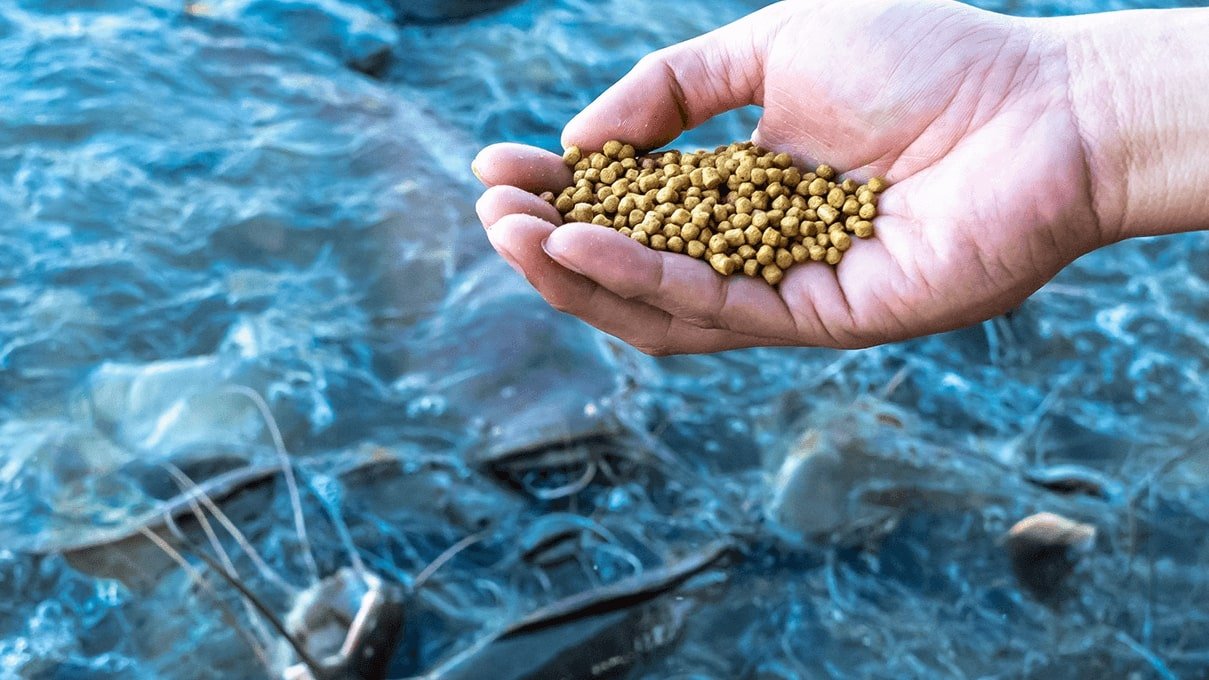
Maximizing Fish Feed Efficiency for Higher Profits
A Comprehensive Guide to Optimizing Your Aquaculture Feeding Practices
Feed typically accounts for 50-70% of operational costs in aquaculture. Implementing efficient feeding strategies can dramatically improve your profitability while promoting sustainable practices.
10 Key Strategies for Optimal Feed Efficiency
1 Use Quality Feed
While low-quality feed may seem cost-effective initially, it ultimately slows fish growth and increases waste production. High-quality feeds contain balanced nutrients, proper protein-to-energy ratios, and better digestibility. Premium feeds typically have:
- Higher protein bioavailability (85-95% digestibility)
- Balanced amino acid profiles matching fish requirements
- Proper vitamin and mineral premixes
- Reduced anti-nutritional factors
Investing in quality feed improves Feed Conversion Ratio (FCR) from potentially 2.5:1 with poor feed to 1.2:1 with optimized formulations, directly impacting your bottom line.
2 Feed by Size and Age
Different life stages require specific nutritional profiles. Implementing staged feeding protocols ensures optimal growth and minimizes waste:
- Fry stage (0-10g): High protein (45-55%), small crumbles (0.5-1.0mm)
- Fingerling stage (10-50g): Moderate protein (35-45%), medium pellets (1.5-2.5mm)
- Grow-out stage (50g+): Balanced nutrition (28-35%), larger pellets (3.0-8.0mm)
- Broodstock: Specialized feeds with reproductive nutrients
Using inappropriate feed sizes leads to poor consumption and significant nutrient leaching into the water column.
3 Feed at the Right Time
Fish are ectothermic creatures whose metabolism aligns with environmental temperatures and natural feeding rhythms. The optimal feeding times are:
- Early morning (6-8 AM): As water temperatures begin rising, fish metabolism increases
- Late afternoon (4-6 PM): Allows digestion before nighttime metabolic slowdown
During winter or cooler periods, reduce feeding frequency to once daily when water temperatures drop below optimal ranges for your species. Feeding during peak metabolic activity improves digestion efficiency by 15-25%.
4 Avoid Overfeeding
Overfeeding is the most common and costly mistake in aquaculture. It wastes feed money and severely impacts water quality through:
- Increased ammonia and nitrite levels from uneaten feed
- Reduced dissolved oxygen from decomposition
- Altered pH and increased biological oxygen demand
Practice careful observation: feed should be consumed within 5-10 minutes. If feed remains after 20 minutes, you're definitely overfeeding. Implement the "little and often" approach rather than large single feedings.
5 Practice Spot Feeding
Concentrating feeding activities to specific locations allows for better monitoring and management. Benefits include:
- Accurate consumption assessment
- Identification of feeding hierarchies and dominant fish
- Early detection of health issues (reduced feeding response)
- Reduced feed dispersion and waste
In pond systems, establish 3-5 feeding stations per hectare. In tank systems, use feeding rings or specific current patterns to concentrate feed.
6 Keep Feed Dry and Fresh
Proper feed storage is crucial for maintaining nutritional value and preventing health issues. Implement these storage protocols:
- Store in cool (below 25°C), dry (humidity <60%) conditions
- Use pallets to prevent ground moisture absorption
- Maintain proper ventilation to prevent condensation
- Practice "first in, first out" inventory management
- Use sealed containers to prevent pest infestation
Poor storage can reduce nutritional value by 15-30% within months and promote mycotoxin development, which can cause fish health issues and suppressed immune systems.
7 Monitor Growth Regularly
Regular biomass assessments allow for precise feeding rate adjustments. Implement a sampling protocol:
- Weigh 50-100 fish every 2-4 weeks
- Calculate average weight and biomass
- Adjust feeding rates according to biomass percentage tables
- Reduce feeding by 20-30% during extreme temperatures
Feeding rates typically range from 1-5% of body weight daily, decreasing as fish size increases. Without regular monitoring, farmers often overfeed larger fish, wasting significant feed resources.
8 Maintain Clean Water
Water quality directly impacts feed utilization efficiency. Key parameters to monitor and maintain:
- Dissolved oxygen: Maintain >5 mg/L for optimal digestion
- Ammonia: Keep <0.05 mg/L to prevent metabolic stress
- pH: Maintain 6.5-8.5 for proper enzyme function
- Temperature: Keep within species-specific optimal ranges
Poor water quality can reduce feed conversion efficiency by up to 40% as fish divert energy from growth to basic metabolic maintenance and stress response.
9 Use Feeding Charts
Scientific feeding charts provide precise guidelines based on fish weight, water temperature, and species requirements. These tools help:
- Eliminate guesswork in daily feeding amounts
- Adjust for seasonal temperature variations
- Account for changing nutritional needs as fish grow
- Prevent both underfeeding and overfeeding
Most feed manufacturers provide species-specific charts. For example, tilapia feeding rates might decrease from 5% of body weight at 10g to 1.5% at 500g. Customize these charts based on your specific conditions and observations.
10 Train Workers
Well-trained feeding personnel are essential for implementing efficient practices. Training should cover:
- Proper feed measurement and distribution techniques
- Observation skills to assess feeding response
- Recognition of abnormal fish behavior
- Basic water quality assessment
- Record keeping and data documentation
Invest in regular training sessions and create clear standard operating procedures. Empower workers to make minor adjustments based on their observations, creating a more responsive feeding system.
The Bottom Line: Benefits of Efficient Feeding
Faster Growth Rates
Optimized nutrition and feeding practices can reduce time to market size by 15-30%, allowing more production cycles annually.
Lower Production Costs
Improving FCR from 2.0 to 1.5 can reduce feed costs by 25%, directly increasing profit margins.
Reduced Environmental Impact
Efficient feeding decreases nutrient pollution, supporting sustainable aquaculture practices and regulatory compliance.
Improved Fish Health
Better water quality from reduced waste decreases disease incidence, lowering mortality rates and treatment costs.
Higher Profitability
The combination of reduced costs, faster growth, and improved survival typically increases profitability by 30-60%.
Business Sustainability
Efficient operations create more resilient businesses capable of weathering market fluctuations and input cost increases.
Efficient Feeding = Faster Growth + Lower Costs + Higher Profits

 Newspaper is an amazing magazine blogger theme that is easy to use and change to fit your needs
No comments
Post a Comment